If you drive an older car in the UAE, it's practically guaranteed you'll see some signs of oil sweating, seeping, or the occasional drip as your mileage climbs. With relentless heat, packed roads, and years of real-world use, most engines develop at least minor leaks as seals and gaskets age. But how do you know when a small oil stain is just part of owning an older daily driver, and when it's a warning that shouldn't wait? This guide will help you recognise which oil leaks you can safely keep an eye on, which ones demand immediate repair, and how UAE conditions can tip the balance from acceptable to urgent. We'll focus on the everyday realities for anyone driving a well-used American, Japanese, Korean, or Chinese vehicle around the Emirates, explaining the risks, red flags, and steps you should take for peace of mind and long term reliability.
Nearly all engines, especially those with years behind them, will eventually show minor oil seepage. The key is knowing what qualifies as normal gasket 'sweating' and what moves into riskier territory.
Gasket sweating appears as a slight dampness or darkening around valve covers, oil pans, or timing covers. You might notice a light oil mist, film, or slightly sticky residue collecting where metal engine parts join with gaskets. Unlike proper leaks, there should be no obvious flow or pools, it’s simply a sign that age, heat, and pressure are starting to take their toll on the rubber or cork seals.
When a seep becomes a leak, it’s usually obvious: you’ll spot drops forming, see them travelling down the engine block, or find stains collecting under the car. If you wipe the area dry but soon find fresh oil appearing, you’re likely looking at more than just sweating. The transition from minor residue to visible drops is the line between monitoring and considering a repair.
As engines get older, the constant expansion and contraction from heat cycles cause gaskets and seals to lose flexibility. In the UAE, the punishing combination of daily temperature swings, long commutes, and stop-start traffic only accelerates seal ageing. Minor sweating is both expected and, up to a point, not a cause for alarm. It's rarely practical to chase every tiny imperfection on an old engine with many years of service.
It’s common to see some signs of oil dampness on a seasoned daily driver, especially around the valve cover or oil pan. But not all leaks require urgent repairs. Here’s when it’s generally safe to monitor instead of rush to the workshop:
A minor, static seep is usually not an immediate threat. However, keep tracking it; a slow change can suddenly become a bigger problem, especially if UAE summer heat ramps up.
Some oil leaks cross the line from inconvenient to urgent. These are the red flags that mean it’s not safe (for your car or your budget) to wait:
If you notice any of these symptoms, do not delay, arrange a professional inspection. Oil loss can quickly lead to engine wear, overheating, or even fire risk if left unchecked.
The UAE is notorious for its extreme climate, especially in peak summer. High ambient temperatures cause engine oil to thin out, making leaks more likely and accelerating the breakdown of gaskets. Prolonged idling and stop-start driving in heavy traffic further raise engine bay temperatures, putting even more stress on seals and hoses. On long commutes, even a small seep can turn into an active leak as the engine spends hours at higher average temperatures. The combination of heat, traffic, and sustained high speeds means an older car’s minor leak can escalate rapidly, turning what would be a manageable issue elsewhere into a real risk here.
Not all leak locations are equally risky. Some can be watched, others are a direct threat to your engine, safety, or both.
Leaks from the valve cover, rear main, or oil filter that allow oil to drip onto the exhaust manifold or downpipe can quickly cause smoke, or, in bad cases, fire. Any oil on hot metal will produce a strong burning smell and sometimes visible smoke. This area always demands urgent attention.
If oil is leaking near drive belts, tensioners, or pulleys, it can cause slippage, squealing, or even make the belts jump off or break. Oil can quickly degrade rubber, multiplying the risk of further damage.
A leak from these locations is often fast-moving and can cause rapid oil loss. A loose or badly sealed oil filter, a cross-threaded or unsealed drain plug, or a perished hose or cooler line can dump large volumes of oil in short order. These are urgent repairs.
If you suspect you have a minor leak, there are some immediately useful checks to stay on top of things:
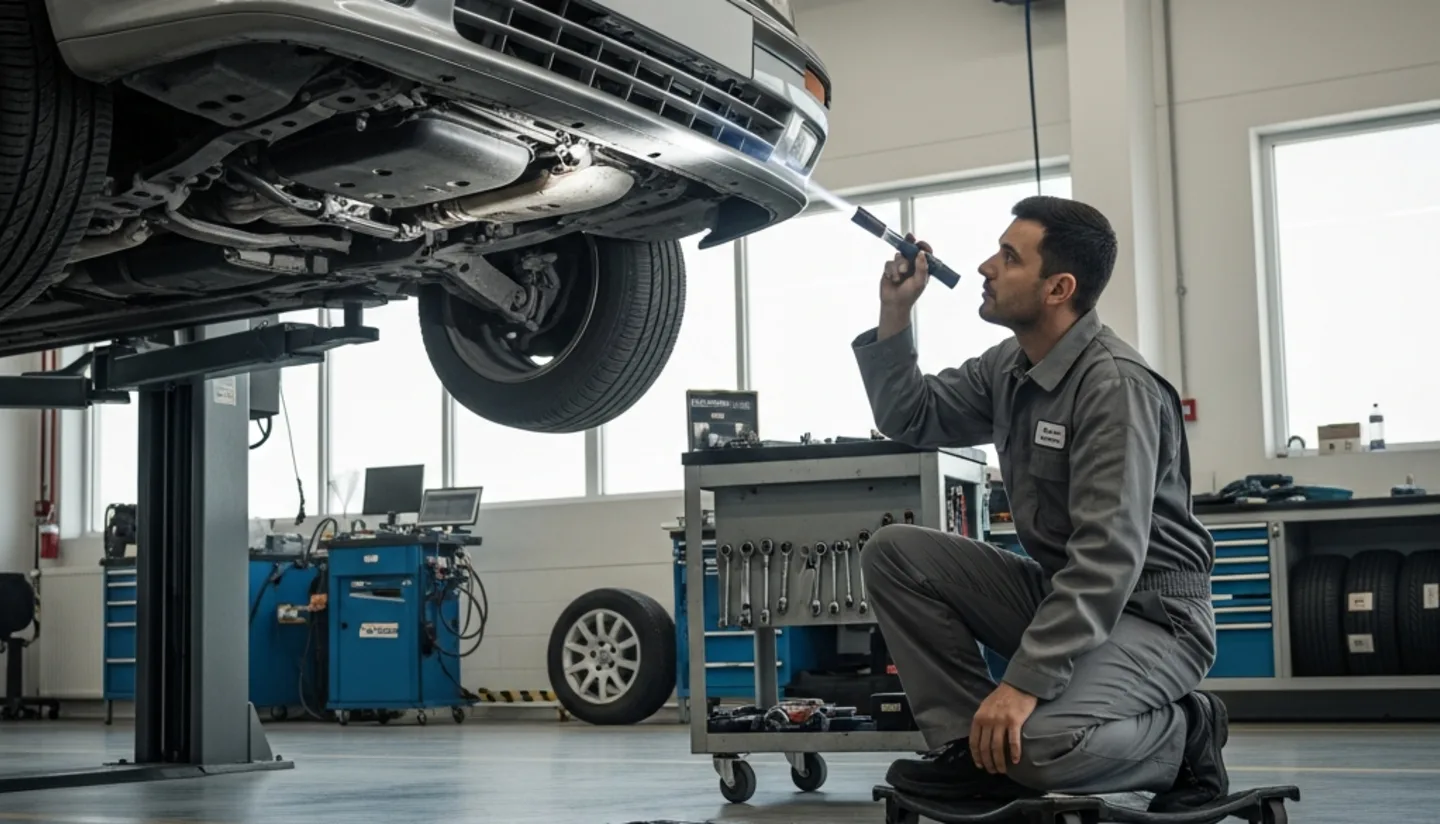
A torch and some old rags can go a long way for quick DIY checks, just take care not to touch hot surfaces immediately after driving.
In most older American, Japanese, Korean, or Chinese vehicles, a few repair jobs cover the majority of minor oil leaks:
For leaks at the front or rear main seals of the crankshaft, or those coming from behind timing covers, repairs are more involved. These can require removal of gearboxes or significant engine disassembly. While not always an emergency on older cars where top-end leaks are minor and oil loss is slow, front or rear main seal leaks often mean it is time to weigh up the cost of repair versus the age and value of the car. If repeated top-ups or worsening symptoms appear, always err on the side of a thorough inspection. Prolonged oil loss, running low, or leaks mixing with coolant or entering electrical connectors signal possible larger mechanical issues, and those can't be safely ignored for long.
In the UAE’s climate, it’s not realistic to expect an ageing daily driver to be bone dry under the bonnet. Most older engines develop some level of oil sweating or minor seepage. If the leak is stable, oil level remains consistent, and there are no alarming smells, smoke, or drops, regular checks and monitoring are usually enough. However, any sign of dripping, smoking oil, low levels between checks, or leaks near hot exhaust or moving belts makes immediate repair your best defence against breakdown or much costlier damage. With smart checks and a prompt response to red flags, you can keep your older vehicle working reliably on UAE roads.