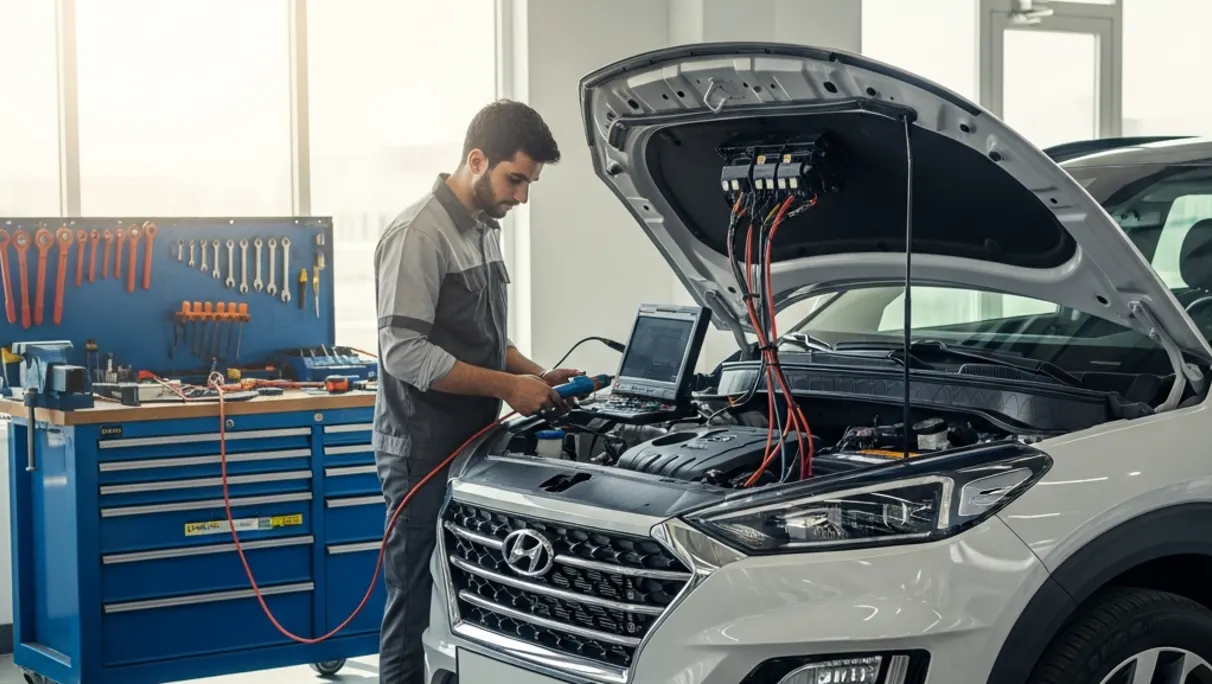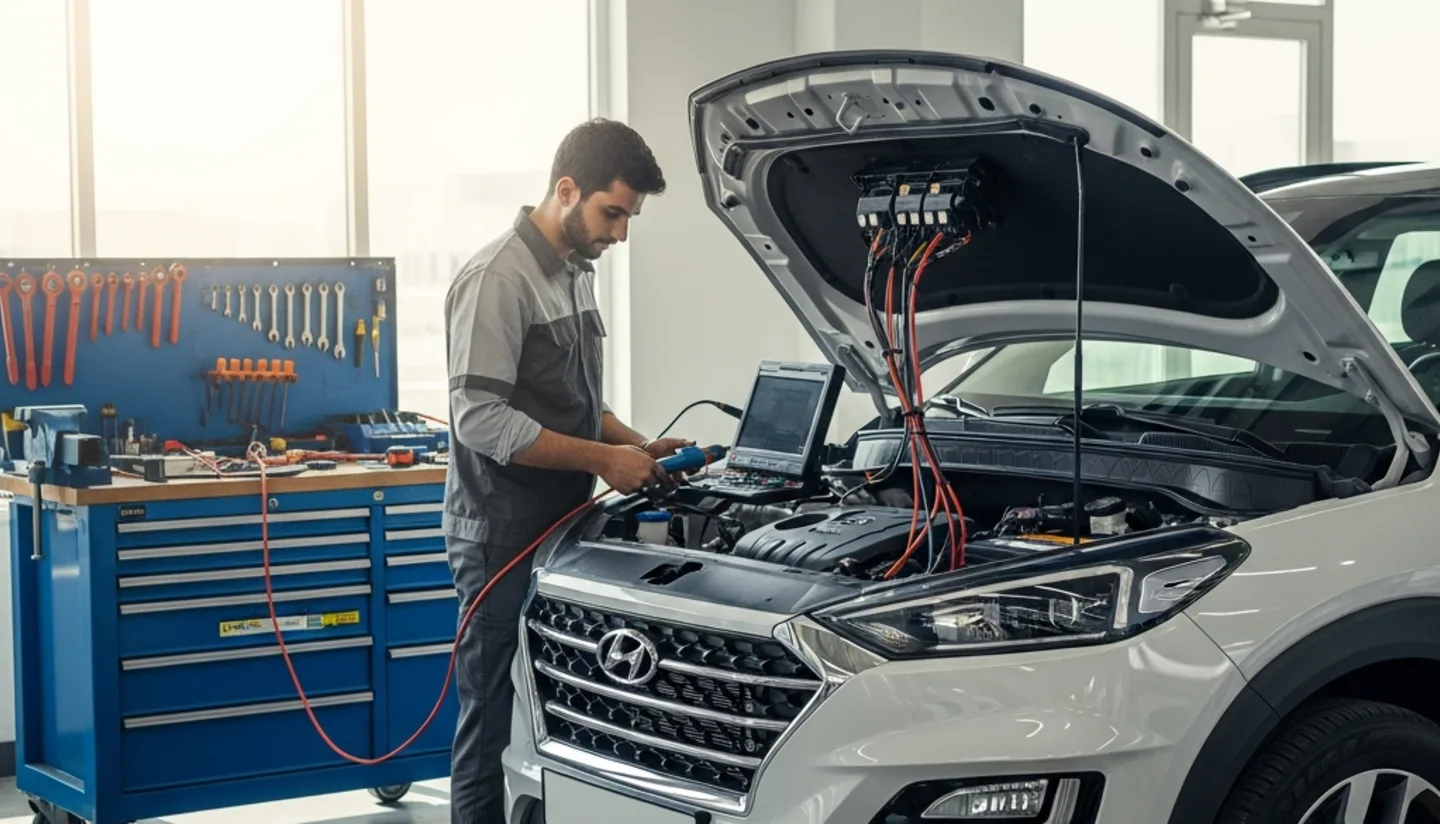
For Hyundai Tucson owners across the UAE, summer is the season when comfort inside the vehicle becomes a daily priority. With outside temperatures regularly climbing above 40°C and urban traffic at its thickest, the air conditioning and sensor systems in your Tucson face tougher conditions than almost anywhere else. It’s often during these months that previously minor AC or sensor issues become unavoidable problems that can disrupt daily driving or lead to expensive repairs if ignored for too long. This guide explains why the UAE climate puts extra pressure on the Tucson’s AC and sensors, what symptoms to watch for, and why diagnosing the real cause of faults matters if you want to avoid repeat failures or needless part replacements. We’ll also share practical, experience-based steps that help prevent issues before they escalate, keeping your Tucson cool, comfortable, and trouble-free through the harshest months.
Summer in the Emirates is no ordinary test for a car’s cooling and electronics. The combination of extreme heat, high humidity, heavy traffic, and ever-present dust creates unique pressures for both AC efficiency and sensor reliability. Here’s how these factors play out: High Heat Puts Extra Load on the AC. During UAE summer, even early mornings see temperatures that push most cooling systems. The Tucson’s AC must run longer and work harder, often for hours at a stretch. This continuous demand can expose any underlying weaknesses , minor refrigerant loss, ageing seals, or a slightly weak compressor , making problems that might not show in winter suddenly obvious in July. Stop-and-Go Traffic Reduces Condenser Cooling. In heavy urban traffic, airflow over the AC condenser drops because the car rarely builds up enough speed to force air through the radiator stack. The condenser sits at the front, converting high-pressure refrigerant gas back into liquid so the AC can provide cold air. Slow or stationary traffic, combined with high outside temperatures, means heat isn’t removed efficiently. This leads to weaker cooling, especially at idle or crawling speeds , exactly when you need relief the most. Dust and Sand Compromise Airflow and Sensor Accuracy. UAE driving means constant exposure to airborne sand and dust. Grilles, condensers, cabin air filters, and sensors all collect debris over time. Blocked condenser fins cut cooling further, while dust on temperature or parking sensors causes incorrect readings or false alerts. Even electronic connectors can corrode or lose contact with enough dust and humidity, triggering warning lights unrelated to actual faults.
Not all AC problems announce themselves with a total failure. In fact, most Tucson owners experience a gradual drop in cooling before anything major breaks down. Recognising these early warning signs can help you act while repairs are still simple and affordable:
A Hyundai Tucson’s AC system is made of tough components, but several faults can affect overall performance, especially in UAE conditions. Knowing what can go wrong, and how to narrow it down, keeps you from chasing the wrong fix:
Gradual refrigerant loss is common and can reduce cooling months before the system is fully empty. In hot climates, rubber seals can shrink or crack. If you notice a steady decline in cold air, or the AC cycles on and off more often, a low gas charge is a leading suspect. However, simply topping up the refrigerant without finding the leak guarantees a repeat issue within weeks or months.
Dust, leaves, and sand caught in the condenser fins block airflow and trap heat, which the AC then struggles to remove. Even a thin layer of dust can cause a measurable loss in cooling efficiency. Cleaning the condenser and surrounding intake areas, sometimes even removing the front grille for access, is a simple but often overlooked step.
The Tucson relies on electric fans to keep air flowing over the condenser, especially in traffic. If these fans fail, slow down, or don’t engage at the right times (due to sensor or relay faults), even a perfect AC system will struggle. A failing fan might cause normal cooling at highway speed but a rapid temperature rise when idling or in stop-start conditions.
Modern AC systems depend on a range of sensors: pressure (to confirm gas state), cabin and ambient temperature, and sometimes evaporator temp. Inaccurate readings here can trick the ECU (engine control unit) into limiting AC output, cutting the compressor, or setting the system into a reduced mode to prevent damage. Sensor faults are common as cars age and as connectors are exposed to heat and dust.
While less common, worn-out compressors, sticking expansion valves, or blocked driers do occur, especially on higher-mileage Tucsons or those with a patchy service history. Diagnosis requires professional testing to avoid expensive trial-and-error replacement.
Sensors underpin almost every part of your Tucson’s cooling and convenience features. Intense heat and dust push these components to their limits, sometimes with subtle or misleading symptoms:
Not all sensor problems make the car undriveable, but ignoring early electrical warnings is a recipe for larger bills down the line. Hyundai dashboards communicate through a range of lights and digital alerts:
Never ignore persistent or repeating warning lights, especially if matched by changes in AC performance. Electronic diagnostics, not just swapping parts, are critical to finding the true cause.
It’s tempting to keep refilling refrigerant, swap out a sensor, or ignore a warning light if things seem to work for a while. But modern vehicles like the Tucson rely on electronic controls that can mask or multiply minor issues. Proper diagnostics are the only way to:
Technicians at multi-brand workshops use scan tools to read error codes, visual inspection to check for leaks or blockages, and experience with local heat-related patterns. Skipping diagnostic steps or insisting on “just topping up the gas” often guarantees the fault will return.
Staying ahead of AC and sensor faults is possible, especially if you know what early warnings look like. Here’s what experienced service specialists recommend for UAE-based Tucson owners:
By combining early attention, regular airflow cleaning, and electronic diagnostics, Tucson owners in the UAE can sidestep the worst summer failures and maintain consistent comfort on the road.
The Hyundai Tucson’s AC and sensor systems are built for everyday use, but UAE summer heat and dust will reveal any maintenance gaps or hidden faults. Recognising weak cooling, staying alert to dashboard warnings, and investing in proper diagnostics, not just guesswork, are your best tools for reliable comfort. With seasonal checks and practical upkeep, you can keep your Tucson cool and avoid unnecessary repairs, making ownership simpler and more cost-effective through even the harshest summer months.