When summer heat sets in across the UAE, few things frustrate drivers more than a car AC that loses its cool as soon as you stop at the lights but blasts icy air once you’re back in motion. This symptom, weak air conditioning at idle but strong cooling while driving, is common on Dubai roads and across the Emirates, especially when temperatures hit 40°C and above. If you’re noticing this issue, you’re not alone, and there’s a good reason it shows up right before or during the hottest months. This article will break down what’s really happening with your AC, why it gets worse during UAE summers, what causes these symptoms in the real world, and how to spot whether you need immediate inspection. Early action doesn’t just restore comfort,it could help you avoid a costly compressor or system failure just when you need cooling most.
When you’re stuck in summer traffic and the AC starts to fade, the cause is seldom a mystery for experienced technicians. Car air conditioning systems rely on a steady combination of airflow, refrigerant pressure, condenser cooling, and compressor performance, all of which change dramatically between sitting still and moving.
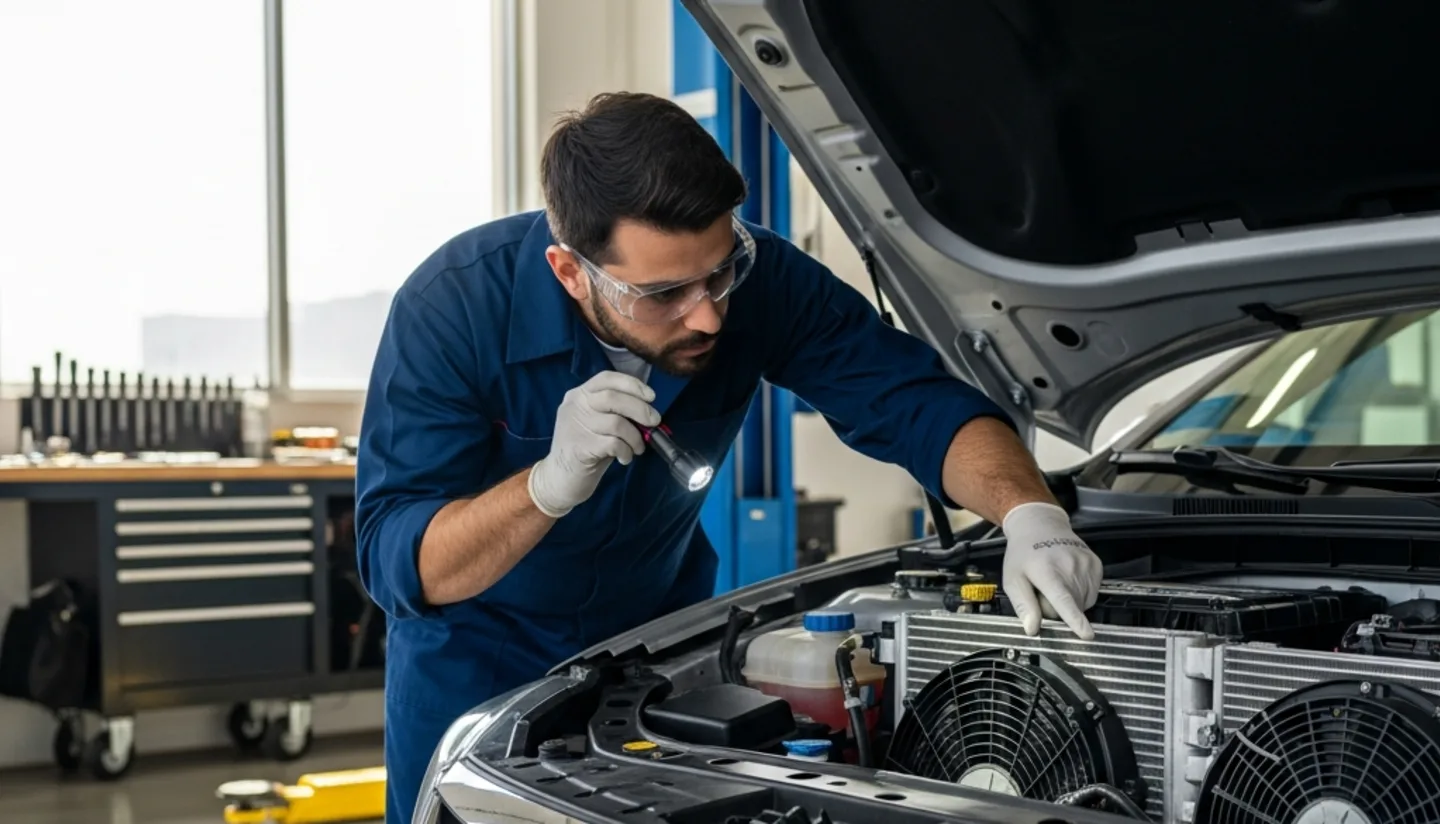
At low speeds or in heavy traffic, the air flowing across your car’s condenser (the heat exchanger at the front of the engine bay) drops sharply. While driving, the front grille gets a powerful blast of air, cooling the AC refrigerant efficiently. When you stop, the system relies solely on its condenser fan to keep the refrigerant cool. If this fan is weak or faulty, heat builds up and AC performance drops, especially at idle.
For the AC to cool well, it must dump heat into the outside air. At idle, the fan needs to do nearly all this work. Any weakness in the fan motor, dirty fan blades, electrical faults, or wiring issues will immediately show up as weak cooling when the vehicle is stationary, even if the system works fine on the motorway.
Once you get moving and airflow through the condenser jumps up, refrigerant pressure stabilises, heat is driven out of the system faster, and the cabin feels cold again. This is why a weak condenser fan or restricted airflow rarely affects AC cooling while cruising but becomes obvious at every red light or in slow-moving queues.
The harsh UAE climate pushes car AC systems to their limits. Several factors make weak idle cooling much more noticeable here:
Small faults that might have gone unnoticed in cooler months quickly become major problems as temperatures climb. This is why pre-summer inspection is especially important in the Emirates.
Restoring reliable cabin cooling means identifying the root cause, not just topping up AC gas. In UAE workshops, these are the faults professionals check first:
A condenser fan that spins slowly, fails intermittently, or doesn’t run at all can leave the system unable to shed heat at idle. Sometimes the fan relay, wiring, or control module is at fault. In other cases, the fan motor is simply worn out from years of harsh conditions. Listen for the sound of the fan running (or failing to run) when the AC is on with the engine idling.
Low refrigerant (commonly referred to as ‘AC gas’) is a classic cause of weak cooling at idle. At low speeds, insufficient pressure makes it harder for the compressor to push cold air into the cabin. You might notice the AC is fairly cold when cruising but lukewarm at the lights. Usually, this points to a slow leak, not just normal loss over time. Topping up without fixing leaks is only a short-term fix.
A condenser clogged with sand, dust, or insects, a frequent problem in UAE conditions, starves your AC of the airflow needed to release heat. Even if the fan is working, restricted airflow can mimic the symptoms of a bad fan or low gas. Regular condenser cleaning is essential for reliable performance.
If the compressor can no longer provide enough pressure at low RPM, cooling will drop at idle but often recover at higher engine speeds. This wear is common in older cars, or those driven for years with low refrigerant. Compressor repairs cost much more than a fan or cleaning service, so catching issues early is vital.
An overheating engine puts extra heat into the AC system. On some models, if the engine gets too hot, the AC may even switch off automatically to protect itself. Signs can include temperature gauge readings above normal, warning lights, or the fan running constantly.
Sometimes, the problem is on the cabin side. A clogged cabin filter, stuck blend doors, or failing AC control panel can cause weak airflow that feels like a cooling problem but is actually a distribution issue. Cabin filters should be inspected and replaced more often in the dusty UAE environment.
While many AC symptoms feel similar, a few signs help narrow down what’s wrong:
If you notice reduced airflow through the vents, even when the fan setting is high, check the cabin filter first, it’s a cheap fix and often missed in dusty climates.
Weak air conditioning at idle is more than annoying, left unchecked, it can set you up for much larger repair bills.
It’s always better to act early. A good workshop can spot minor faults before they turn into major expenses, particularly before the peak Dubai and Abu Dhabi summer heat arrives.
A quality AC inspection goes beyond a simple gas top-up. To avoid repeated breakdowns, specialist workshops in the UAE will:
Regular AC checks, ideally before the hottest months arrive, help spot trouble before discomfort and big repair bills set in.
If your car’s AC fades at idle but blasts cold while driving, don’t shrug it off, especially in the UAE’s fierce summer. The causes range from weak condenser fans and dirty condensers to low refrigerant or tired compressors. In the Emirates’ extreme heat, these issues only get worse with delay, risking bigger faults at the very time you need strong, reliable cooling. Early AC inspection is quick, relatively affordable, and the best way to prevent small faults turning into system failures. Make it part of your pre-summer vehicle prep, your comfort, wallet, and engine will thank you when the Dubai sun is at its worst.