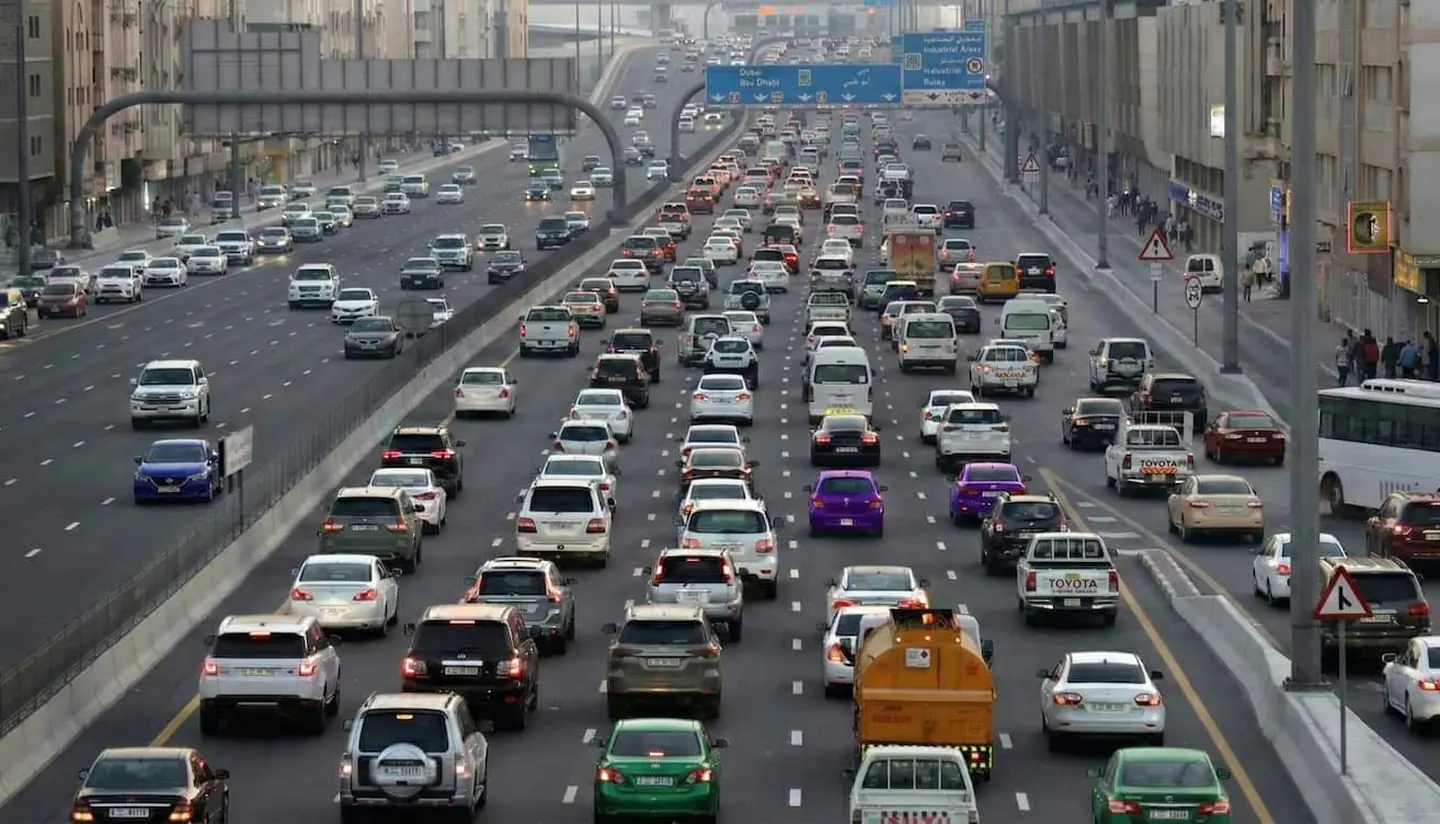
Traffic in Dubai is a familiar experience for many drivers. With rapid population growth, increasing car ownership and busy peak hours each weekday, motorists often find themselves inching along major routes rather than cruising smoothly at 100 kph or more. On paper, that may not seem like a big issue. The car is moving, after all. But the way it moves matters far more than most people realise.
Modern vehicles are built to handle a range of conditions, yet they are generally at their most efficient when travelling at a steady speed. Long stretches of smooth highway driving allow systems to stabilise, temperatures to regulate and components to operate within predictable ranges. Stop and go traffic does the opposite. It keeps forcing the car to adjust, react and strain in short bursts.
What many people do not realise is that the kind of driving encountered in this kind of congestion actually tends to be tougher on a car than highway driving. The wear and tear is real and, over time, can result in higher maintenance costs, earlier part failures and general reduction in vehicle reliability.
Here’s how it works and what it means for car owners in Dubai and similar cities.
Stop and go traffic refers to a pattern of driving in which a vehicle frequently accelerates from a near standstill and then brakes back to a stop again. This pattern is common in urban rush hours, at traffic lights, construction zones and whenever vehicles are packed closely together at low average speeds. It contrasts with highway driving, where cars travel at a steadier, consistent pace for long durations.
In real life, this means that in cities like Dubai, the engine, brakes, transmission and suspension are repeatedly stressed in short bursts rather than being allowed to find a stable rhythm. The result is increased mechanical strain that simply does not occur as intensely on long highway journeys.
Under highway driving conditions, an engine typically runs at a steady, efficient speed with a consistent airflow across the radiator and engine bay. This helps regulate temperature and maintain clean combustion. In stop and go traffic, the engine never quite settles into this efficient pattern. It is constantly warming up, then cooling repeatedly and often idling without forward motion.
What this means is:
These effects are subtle but compound over time, increasing the risk of premature engine wear and, if neglected, more significant engine issues.
One of the most obvious differences between congested urban driving and highway travel is how often the brakes are used. On a highway with free flowing traffic, a driver may hardly touch the brakes for minutes at a time. In contrast, driving in heavy city traffic often requires braking every few dozen metres.
Heavy braking:
In Dubai, local data suggests drivers perform multiple brake pedal actions per kilometre in heavy traffic compared with steady use on open roads. This repeated braking cycle translates directly into increased maintenance frequency and cost.
The transmission in your car is designed to be more efficient when there is a long period between gear changes. Whether automatic or manual, stop and go conditions force near continuous shifting. In automatic transmissions, this means repeated clutch pack engagement and release. In manual transmissions, it means persistent clutch use.
This has several consequences:
Put simply, your transmission is working harder in stop and go traffic, and it ages faster as a result.
It is not just the engine and transmission that feel the strain. The suspension and steering systems also take a beating in congested traffic. Every time a car moves forward a bit, slows down, brakes, and accelerates again, small but repeated forces act on tyres, bushings and shock absorbers. Over time, this can cause:
These subtle stresses are normally spread out on a highway where a car travels in a consistent direction and speed.
Stop and go traffic reduces fuel efficiency compared with highway travel. Part of this is because the engine spends more time in inefficient operating ranges, and part of it is because idling itself uses fuel without any forward motion. This also increases emissions because the engine is not at its optimal temperature for full combustion.
In Dubai’s hot climate, air conditioning is often running at full tilt during congested periods, which further increases fuel use and puts extra thermal load on the engine cooling system.
Dubai’s environment adds another layer of strain. The city’s heat and fine desert dust mean cars in general face harsher conditions than in many other locations. Heat affects fluids like oil and transmission fluid, making them break down faster. Dust can infiltrate filters and wear moving parts more quickly than in a less dusty environment.
In stop and go traffic, these environmental stresses are amplified because the engine and cooling systems operate under fluctuating loads. This makes preventive maintenance even more important than it would be in cooler, cleaner climates.
Understanding the problem is one thing. Acting on it is another. A simple way to think about it is to use a four part framework: Monitor, Maintain, Modify, and Minimise.
Start by being honest about how the car is used. If most journeys involve Sheikh Zayed Road during peak hours or short urban commutes, then the vehicle is living a stop and go life.
What this means is that servicing schedules should reflect city driving, not ideal highway conditions. Many manufacturers service intervals assume mixed driving. If the car spends most of its time in congestion, oil changes and brake checks may need to happen sooner than the maximum interval listed in the handbook.
Once the driving pattern is clear, adjust maintenance accordingly.
If you only do one thing, do this: shorten oil change intervals slightly if most driving is in heavy traffic. Fresh oil is one of the simplest ways to reduce long term engine wear.
Driving style plays a big role in how much stress the car experiences.
In real life, it looks like this: instead of accelerating hard to close a small gap, maintain a smoother pace and anticipate braking early. Gentle acceleration and progressive braking reduce strain on the engine, gearbox and brake components.
Leaving slightly more space to the car in front also helps. It reduces the need for constant sharp braking and allows smoother rolling movement, which lowers wear over time.
Not every driver can avoid peak hour congestion, but small changes can help.
The catch is that some traffic is unavoidable. The goal is not perfection but reduction. Even small improvements in exposure can slow long term wear.
Highway driving is not without its own stresses, but many of the factors that cause accelerated wear in stop and go traffic are minimised on open roads:
In simple terms, this means that for many components, the life expectancy under regular highway travel can be significantly longer than in city congestion.
Understanding why stop and go traffic affects vehicles more severely should change how drivers think about maintenance and ownership costs:
Beyond individual cars, reducing congestion across the road network also offers benefits. Dubai’s transport authorities are actively working on traffic management, including smart traffic signal systems and infrastructure improvements that aim to reduce the time vehicles spend in stop and go conditions. Although these initiatives are focused on improving mobility for all residents, they also help reduce the mechanical impact on vehicles by smoothing traffic flow.
Stop and go traffic puts a range of stresses on cars that highway driving simply does not. Engine wear, brake use, transmission strain and suspension pressures all increase under congested conditions. In a city like Dubai, where traffic is a daily reality for many commuters, this is a factor that drivers should acknowledge and plan for in their maintenance habits.
By applying a simple Monitor, Maintain, Modify and Minimise framework, drivers can reduce unnecessary wear and make their vehicles last longer under demanding urban conditions.
The key point is not to fear city driving but to understand it. When heavy traffic is treated as a normal operating condition rather than an occasional inconvenience, maintenance decisions become more realistic. That shift in mindset alone can prevent expensive surprises and help a car remain dependable for many years, even in Dubai’s demanding stop and go environment.