.webp)
The vast expanse of sand that stretches across the UAE is not just a backdrop for weekend adventure. It is a real test of a vehicle’s strength, cooling systems, traction, suspension and sheer ability to cope with the harshest conditions on earth. When someone in the UAE is thinking about an all terrain SUV that can handle extreme heat, deep dunes and everyday use, two names always rise to the top of the conversation: the Nissan Patrol and the Toyota Land Cruiser. Both have earned iconic status here, but they take slightly different approaches to desert performance and overall capability.
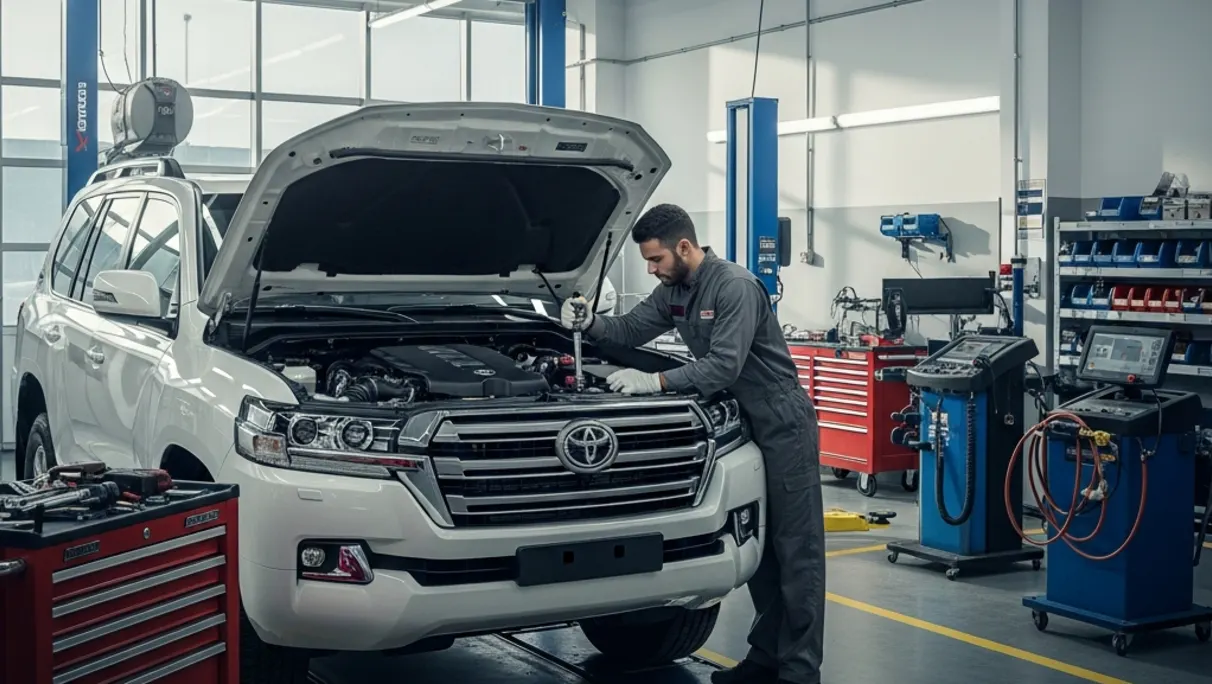
The Toyota Land Cruiser has a long history going back decades in the UAE. It has become something close to a cultural institution, trusted by families, explorers and government fleets alike because of its reputation for relentless reliability and durability across deserts and rough terrain. Its name is almost synonymous with “go anywhere” for many drivers in the Emirates.
The Nissan Patrol is no less storied. Also established here for many years, it made its name tackling the toughest terrain with robust engineering and strong performance. Over time it has evolved into a premium SUV that also happens to be one of the best desert performers available.
In the UAE, where summer temperatures routinely climb well above 40°C, an SUV’s cooling system, engine risk of overheating, traction systems, and comfort levels are not just marketing points. They are essential attributes that determine whether a vehicle is worthy of consideration for serious desert driving.
Where some SUVs struggle, both the Patrol and the Land Cruiser shine, but they have different personalities.
The current generation Toyota Land Cruiser in the UAE is often equipped with a twin turbo V6 around 3.5 litres that produces strong torque figures and sufficient horsepower for both road and off road use. The Land Cruiser’s drivetrain pairs this engine with a robust automatic transmission and a full time four wheel drive system that gives it predictable traction and stability across shifting surfaces.
The Nissan Patrol typically brings a naturally aspirated V6 or turbocharged V6 option, with some top variants tuned for more power and torque than comparable Land Cruiser base setups. In practical terms for desert use, that means the Patrol has strong low end pull that helps it climb dunes or pull itself out of soft sand without constant wheel spin.
Here’s how that translates in real life:
Neither vehicle is underpowered, but if you plan serious dune driving and rapid changes of speed on sand flats, the Patrol’s extra power can help you flare out of a soft patch without reaching too low in the rev range.
Here’s the thing about desert sand: it can shift under your tyres in an instant. What keeps a vehicle moving is its traction system, wheel travel, and suspension setup.
Both SUVs come with advanced four wheel drive systems and selectable terrain modes that adjust how power is delivered to each wheel. These systems can be critical when conditions change or when sand depth varies across the same drive.
What matters most in desert driving includes:
Ground clearance is slightly higher on some Patrol variants, which can make a subtle difference when cresting dunes or traversing summits without digging in. The Patrol’s suspension geometry and travel tend to favour off road articulation, which helps keep as many wheels in contact with the surface as possible when things get rough.
The Land Cruiser compensates with very refined systems such as adaptive suspension and electronically assisted traction aids. These systems can read surface conditions and modify propulsion and damping to maintain momentum, which is useful when the desert turns technical or when you are navigating rocky transitions between dune fields and hardpack.
In short:
Both will conquer the vast dunes of the Rub’ Al Khali and smaller dunes like those around Liwa Oasis or Al Khazna. Just note that a smart tyre pressure strategy and careful throttle control are often more important than raw SUV power in deep sand.
Desert driving in the UAE exposes engines to constant high temperature challenges. Radiators, intercoolers and airflow matter more here than in temperate climates.
Both Nissan and Toyota know this because of how many of these vehicles spend time in the Gulf region. Manufacturers often build UAE spec cooling upgrades into their full size SUVs to help them cope with sustained high temperatures and heavy load driving.
Important factors that help these vehicles survive extreme desert heat include:
Land Cruiser cooling systems are well regarded for resisting overheating, even when a vehicle is fully loaded with passengers. Patrol has enhanced cooling capacity in its newer versions and is widely known among desert enthusiasts for being resilient in prolonged heat.
What this means is that you can expect both SUVs to manage heat effectively when driven properly and maintained at manufacturer intervals. That said, extreme desert racing conditions will stress any vehicle more than weekend dune bashing, so regular checks of coolant, hoses and thermostat performance remain essential.
Here’s the catch for many UAE drivers: these SUVs need to be desert beasts and comfortable daily vehicles. Neither Patrol nor Land Cruiser sacrifices comfort, but their choices differ.
The Toyota Land Cruiser leans more towards a balanced ride for on road travel, combined with competent off road suspension. Its interior technology tends to focus on driver assistance systems, refined air conditioning able to handle hot summer months and smart terrain management interfaces.
The Nissan Patrol focuses on spacious cabins and a strong presence. Third row space in the Patrol can be more generous, and in many trims, the SUV gives a slightly sportier feel on paved roads.
In practice, this means:
Both SUVs are comfortable for long desert trips, but the Patrol’s packaging can feel more open, while the Land Cruiser’s ride tends to feel more controlled at highway speeds.
If desert performance is your only concern, the Patrol’s slightly stronger torque figures and suspension articulation give it a small edge in deep, soft sand environments. That’s not to say the Land Cruiser will be left behind. In real life, it keeps pace and offers smoother transitions between desert, gravel and asphalt without needing constant driver adjustment.
However, it helps to think about how you will use the vehicle across the whole year:
Both vehicles will serve well in UAE desert conditions, but their strengths tilt slightly to different needs. Neither is wrong, and in many cases, the choice will come down to personal preference, extra features you value, and how often you expect to use your SUV in demanding conditions beyond sand.
In the UAE, where the desert is both a playground and a proving ground, both the Nissan Patrol and Toyota Land Cruiser will exceed the expectations of most drivers. The Patrol edges ahead when raw sand performance matters most, while the Land Cruiser offers a blend of comfort, advanced tech and consistent capability. Choose based on how often you will tackle dunes, how much luxury you want on normal roads and how you balance desert thrills with everyday driving needs.
Whatever you decide, both SUVs represent decades of engineering tailored to one of the harshest, hottest and most demanding terrains on earth. For drivers who value reliability, space and rugged performance, either choice will deliver many memorable desert miles.