The UAE’s roads demand a lot from modern vehicles, especially when it comes to automatic gearboxes. Among these, CVT, or continuously variable transmission, gearboxes are common in popular models from Nissan, Mitsubishi, Honda, and Toyota. CVTs bring smoother acceleration and better fuel efficiency, but they also have unique maintenance needs, particularly under harsh UAE conditions. With high average temperatures, daily traffic jams, and long highway drives, the risk of early CVT failure is very real for many car owners. If you drive any of these brands and want your car to stay smooth, reliable, and affordable to run, CVT care isn’t just a recommendation, it’s essential. This article breaks down the reasons CVTs are vulnerable in the UAE, covers what you can do as an owner, and explains how good habits and timely service can keep costly gearbox repairs off your horizon.
CVT gearboxes in the UAE face a punishing environment. High ambient temperatures, heavy stop-and-go traffic, and long highway drives put extra strain on both the gearbox and its critical fluid.
Heat is the greatest enemy of any transmission, but CVTs are particularly sensitive. In the UAE, summertime cabin temperatures can soar past 50°C. The road surface bakes car underbodies and transmissions, causing transmission fluid to thin out and lose its ability to cushion and cool moving parts. With less protection, the steel belt, pulleys, and critical bearings in the CVT suffer faster wear, making the risk of early failure much higher.
City congestion keeps the gearbox working near constantly, with frequent shifts, changes in throttle, and little time to cool off. On long highway trips, high sustained speeds and hot weather keep CVTs operating at high temperatures for extended periods. Both situations accelerate fluid breakdown and push the gearbox beyond its normal comfort zone.
Few CVT-equipped models are designed for heavy towing or load-carrying, and in extreme heat, these demands can dramatically raise transmission temps. Aggressive driving, like frequent hard acceleration or jumpy throttle use, puts shock loads through the belt and pulleys, causing slippage, premature wear, and sometimes noisy whining.
Not all automatic cars use CVTs, but for drivers of certain Nissan, Mitsubishi, Honda, and Toyota models in the UAE, knowing if yours has a CVT is the first step to proper care.
Always confirm with your owner's manual or a reputable service centre if you're unsure. Trims and gearbox choices can vary by year and market.
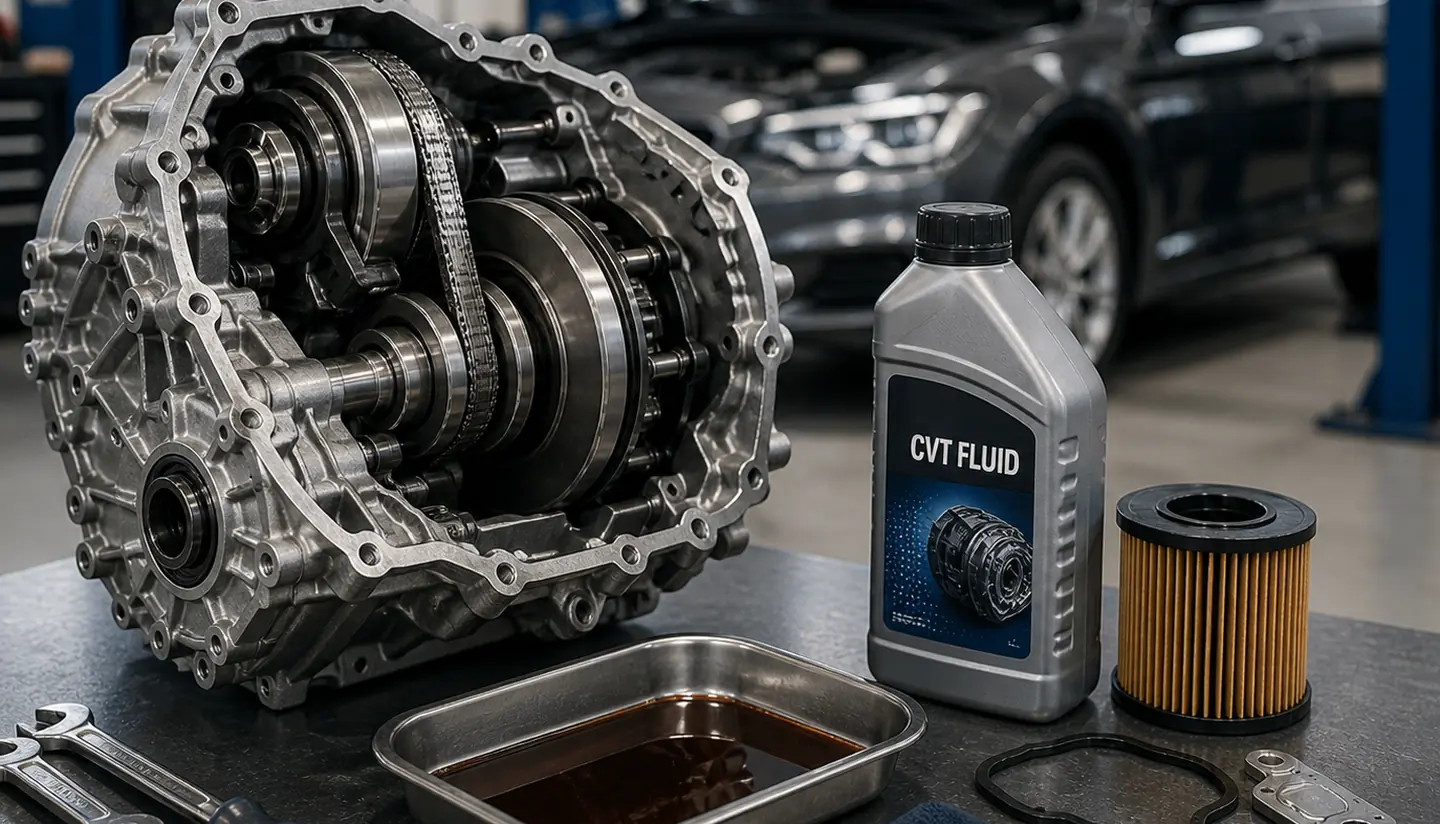
The choice of transmission fluid, and how often it’s replaced, makes or breaks CVT longevity in UAE conditions.
Each manufacturer specs its own CVT fluid formula, designed for the belt and pulley metals, internal seals, and operating temperatures unique to that transmission. Using generic or mismatched fluids, even if labelled “CVT,” can seriously increase wear, create shuddering, or lead to early gearbox damage.
Cheap, third-party, or universal fluids may not provide proper friction properties or heat resistance. In real terms, this means you could face:
Globally, some manufacturers claim ‘lifetime’ CVT fluid, but in UAE heat, this is misleading. Service experience and severe-use guidelines say:
Delaying fluid service risks irreversible gearbox wear.
Both the engine cooling system and any gearbox-specific cooler play vital roles in preventing CVT overheating and fluid breakdown.
Many CVTs share the engine radiator for cooling, or have an extra small transmission cooler. Any clog, leak, or fan failure reduces cooling, causing fluid temp to spike during traffic jams or on long drives.
Old or contaminated engine coolant can't transfer heat as efficiently, making overall operating temps higher. Blocked air intakes or dirty coolers restrict the airflow needed to cool the fluid. This is especially a risk after dust storms or off-road desert driving, which can block radiators quickly.
A routine check of the following is recommended at every major service, or sooner if overheating or warning lights appear:
Spending a little time here now avoids a very expensive repair later.
Your driving style can make a big difference in how long your CVT lasts.
CVTs are designed for gradual power delivery. Smooth, progressive use of the accelerator minimises the shock load through the belt and pulleys. Try to avoid abrupt starts, hard launches, or stamping on the throttle in traffic. This is especially important in stop-start city conditions.
CVTs dislike constant heavy loads or rapid downshifting (kickdown), as these put sudden strain on the internal belt system. If you must drive with extra passengers, luggage, or up steep gradients, be gentler with acceleration and avoid using manual mode to downshift aggressively.
Catching problems early is the key to minimising repair bills.
A healthy CVT should be quiet. High-pitched whining, humming, or grinding under acceleration suggests the fluid is breaking down or the internal components are wearing. The sound may rise and fall with engine RPM or road speed.
If you notice hesitation or delayed movement when starting from a stop, or the engine revs rise without corresponding speed gain, this is a classic sign of slipping, often from worn fluid or belt degradation.
Any of these issues mean the CVT needs prompt inspection. Prolonged driving will only worsen the damage.
Owners who act early often avoid massive expenses.
Some issues, like fluid change or minor valve body cleaning, are simple if caught at the first sign of trouble. Ignoring these symptoms risks turning a minor, manageable repair into a full gearbox rebuild or replacement.
If you notice persistent whining, slipping, delayed response, warning lights, or burning smells, get your car to a specialist service centre right away. Using professional diagnostic tools, technicians can pinpoint whether service, repair, or fluid replacement will still save the gearbox.
Fluid and cooling system maintenance can cost a fraction of a full CVT replacement, which can run into the tens of thousands of dirhams for some models. Investing in regular care extends gearbox life and protects your car’s value for years to come.
The UAE’s climate and driving conditions are tough on CVTs, but smart maintenance and good habits make all the difference. Stick with brand-specific fluids, shorten change intervals, mind the cooling system, and drive gently when possible. Pay attention to early warning signs and never postpone inspections if something feels off. With early action, most owners of Nissan, Mitsubishi, Honda, and Toyota cars can sidestep major CVT failure and keep their vehicles running smoothly in the UAE's demanding environment.